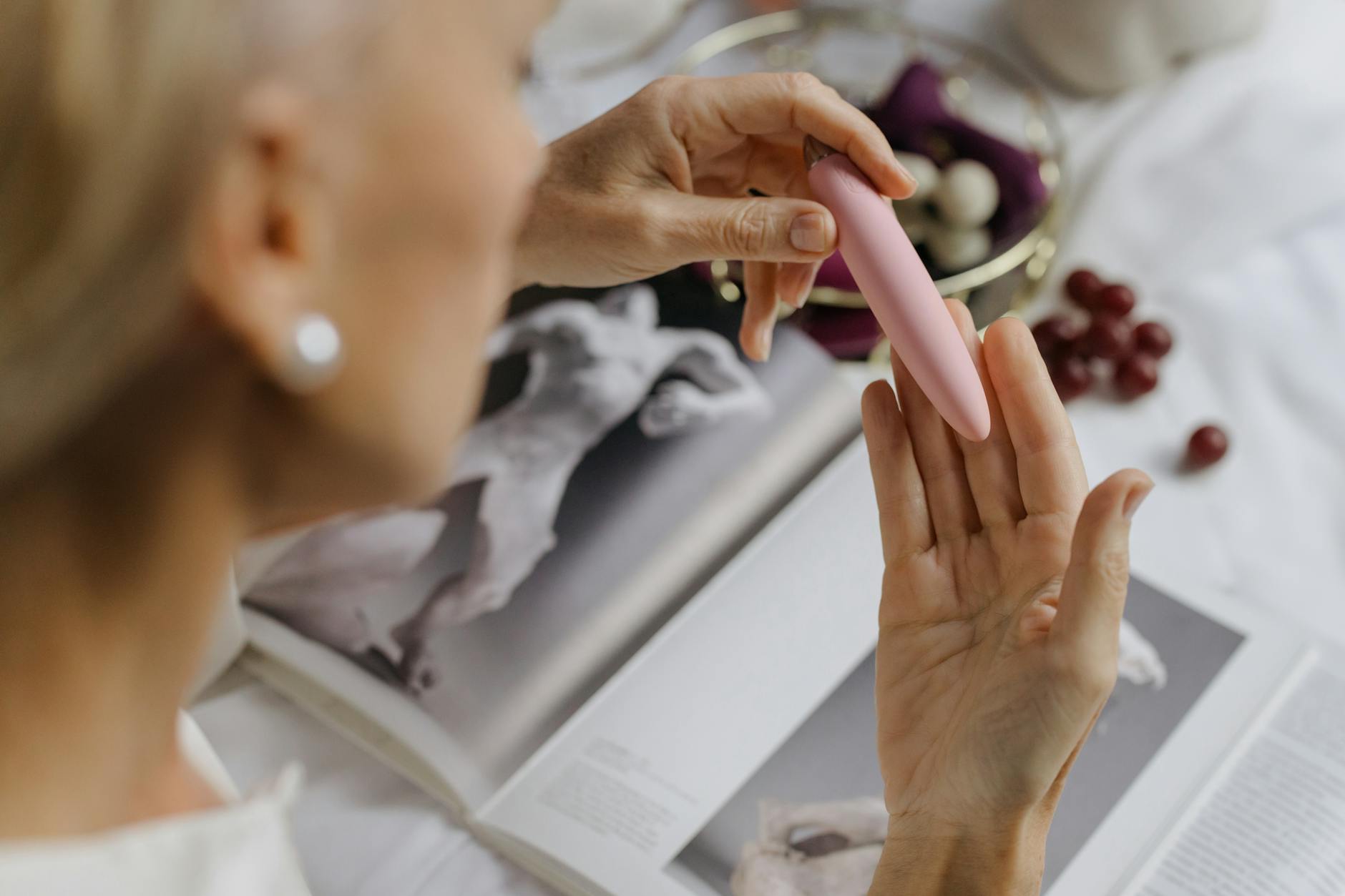
Let's be real about what perimenopause actually does to pleasure
Perimenopause is weird because it doesn't announce itself clearly. You might have one month where your clitoris feels hypersensitive and another where it feels muted. Lubrication becomes unpredictable. Arousal takes longer to build, then sometimes it rushes in all at once. Most frustrating: nobody tells you this is completely normal, and completely fixable.
Here's what I see with clients in perimenopause who want to reconnect with pleasure. They start thinking their body is broken. It's not. It's just asking for different tools and a different approach. That's where lemon vibrators come in.
Why your sensation feels different right now
Perimenopause means estrogen levels are fluctuating wildly, not steadily dropping like after full menopause. One week estrogen is high, and you feel like yourself. The next week it bottoms out, and sensation changes completely. Progesterone swings too, which affects arousal speed and lubrication independently of estrogen.
The clitoris itself doesn't lose nerve endings during perimenopause. What changes is blood flow and tissue sensitivity. Thinner vaginal tissue means direct friction can feel uncomfortable or even painful. Lubrication becomes lighter and less consistent. The pelvic floor, which supports everything, can become tense from hormonal shifts and stress, which numbs sensation paradoxically.
But here's the thing nobody tells you: suction-based pleasure works better during perimenopause than traditional vibrators do. Why? Because suction stimulates the clitoris and surrounding tissue without requiring thick lubrication or direct friction on thinner tissue.
How lemon vibrators work with perimenopause, not against it
Lemon vibrators use air-suction technology instead of traditional vibration. That means the device gently cups the clitoral area and creates rhythmic pulses of air, stimulating nerve endings through gentle pressure rather than friction.
During perimenopause, this matters enormously. You get:
Sensation without friction discomfort. If direct touch feels too intense or raw, suction gives you deep stimulation without scraping against sensitive tissue.
Results even with less lubrication. Traditional vibrators need healthy lubrication to feel good. Suction vibrators create their own seal and work effectively with minimal or no lube.
Faster arousal activation. The gentle suction pattern actually primes blood flow faster than many people expect, which helps speed up arousal when your body is being slow to respond.
Less fatigue. Suction-based lemon vibrators usually bring you to orgasm faster than friction-based vibrators, which matters if you're exhausted from perimenopause symptoms.
Building your perimenopause pleasure toolkit
Start with the basics. You need three things: the right vibrator, the right lube, and permission to go slower.
The vibrator itself. A lemon clitoral vibrator is built for exactly this moment. The design is smaller and more focused than wand vibrators, which helps you control intensity precisely. Start on the lowest suction setting. Your tissue is more responsive than you think, and you don't need high intensity to reach orgasm during perimenopause. Honestly, many people find lower settings more pleasurable because they create building sensation instead of overwhelming it.
Lubrication matters, even though you might think it shouldn't. Water-based lube is your friend here. Even if your body is making some lubrication, a thin layer of lube reduces friction and makes the suction feel better. Silicone-based lubes feel richer, but they degrade silicone toys, so stick with water-based.
Time and patience. Arousal during perimenopause takes longer. Budget 20 to 30 minutes instead of 10. Start with your lemon vibrator on setting 1 or 2 and build slowly. Your body wants to respond. It just needs more runway.
What perimenopause changes about partnered pleasure
If you're using lemon vibrators with a partner, the dynamic shifts. Your partner might be concerned that you need a toy, or wondering if something is wrong. This is the moment to separate two conversations.
"My body is responding differently because hormones" is different from "I want us to explore something new together." The first is biology. The second is desire. Both can be true, and both deserve attention, but confusing them turns everything into a problem conversation.
Many couples find that introducing a lemon clitoral vibrator into partnered sex actually deepens connection because it removes performance pressure. You're both focused on sensation together, not on whether arousal is happening on schedule.
When perimenopause creates unusual sensations
Sometimes perimenopause brings hypersensitivity instead of numbness. Your clitoris feels too reactive, orgasm comes too fast, or sensation feels almost painful. This is equally real and equally fixable.
With hypersensitivity, use your lemon vibrator on the absolute lowest settings and try indirect stimulation. Many people find that applying the suction slightly offset from directly on the clitoris, over the hood or to the side, gives sensation without overwhelm. You can also use the vibrator through fabric, which mutes intensity.
The point is: adjustment is normal, and lemon vibrators are adjustable. You're not stuck with one way of using them.
Checking in with yourself during the shift
Perimenopause is also the time when relationship stress, work stress, and midlife transitions pile up. It's easy to blame hormones for lost pleasure when sometimes it's actually stress, disconnection from your partner, or changed life circumstances wearing a hormonal disguise.
Before assuming you need to change your pleasure toolkit, ask yourself: Am I stressed? Am I exhausted? Is there tension in my relationship that's unresolved? Sometimes the answer is lube and a lemon vibrator. Sometimes it's "I need to talk to my partner about something." Often it's both.
If pleasure disappeared completely and isn't returning even with tools and time, that's the moment to talk to a doctor. A good perimenopause-aware gynecologist can check whether something like genitourinary syndrome is developing, which is real and very treatable.
Making pleasure a practice, not a performance
Here's what I tell clients: perimenopause is not the end of your sexual life. It's a reboot. You get to figure out what works for your body right now, not what worked at 28.
Try Lemon Vibrators makes clitoral vibrators specifically designed for this kind of exploration. Whether you're reconnecting solo or with a partner, the tool is there. What matters is showing up curious instead of frustrated.
Set a timer for 30 minutes. Light the space however feels good. Get lube. Start on the lowest setting. Let your body surprise you. Perimenopause doesn't end pleasure. It just makes you meet it differently.
FAQ: Common questions about lemon vibrators and perimenopause
Can I use a lemon vibrator if I have vaginal dryness?
Absolutely. Lemon vibrators actually work better with dryness than traditional vibrators because suction doesn't require healthy lubrication to feel effective. That said, add a thin layer of water-based lube anyway. It makes the suction feel richer and reduces any potential friction. A small amount goes a long way.
How long does it take to orgasm with a lemon clitoral vibrator during perimenopause?
It varies wildly depending on the day, your stress level, and where you are in your hormonal cycle. Some days 5 minutes, some days 25. That's normal and not a sign something is wrong. If you're consistently taking over 45 minutes, that might signal you need a different setting, more lube, or a conversation with your partner if you're not alone. But there's no "right" timeline.
Is it normal for sensation to feel different week to week?
Yes. Perimenopause means your estrogen is fluctuating, so sensation, lubrication, and arousal speed genuinely change multiple times a month. One week your clitoris feels eager, another week it feels sleepy. That's perimenopause working exactly as biology intends. Your tool should adapt. Lemon vibrators let you adjust intensity, which helps you meet your body where it is each time.
What if my partner is uncomfortable with me using a vibrator?
That's a conversation worth having outside the bedroom. Explain it's not about him or her, it's about your body asking for a different kind of stimulation right now. Many partners actually relax once they understand that a tool isn't replacing them. It's solving a sensory problem so you can both enjoy pleasure together. If discomfort persists, couples counseling can help navigate it.
Can I use a lemon vibrator if I have no interest in partnered sex?
Completely. Solo pleasure during perimenopause is how you learn what your body needs right now. No performance pressure, no timeline, no one else's needs. Solo exploration with lemon vibrators is actually how most people figure out what settings work, what intensity feels good, and what helps them reconnect with desire.
Should I use my lemon vibrator every day or space it out?
Use it as much as feels good. Some people pleasure themselves daily, some weekly. There's no threshold where it becomes "too much." Your body won't get desensitized to suction the way it sometimes does to traditional vibration. If you're using it and not reaching orgasm, that might mean you need more lube, a different setting, or more time to warm up. Not that you're using it wrong.
How to reconnect with pleasure when perimenopause feels like a detour
Perimenopause is temporary. Your body will settle into menopause eventually, and sensation will stabilize again. But right now, in the shift, you don't have to white-knuckle through it. You get to adapt your tools, adjust your approach, and rediscover what pleasure feels like in this new chapter.
That's not resignation. That's wisdom. And it's exactly what lemon vibrators are designed for. If you have questions about whether a clitoral vibrator is right for you, reach out. We're here to help you find your way back to pleasure, one sensation at a time.