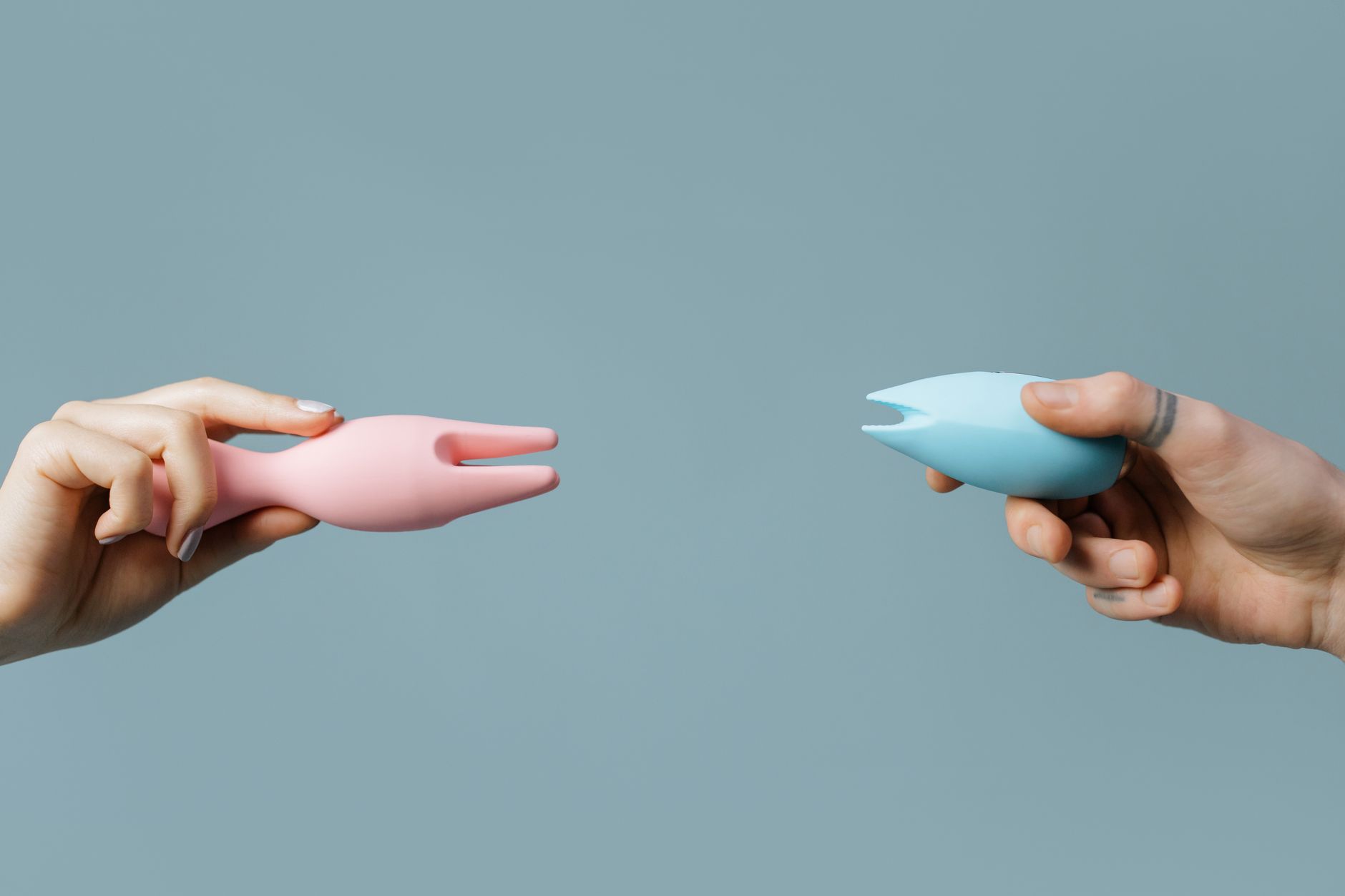
Let's name what's actually happening
You want to use a lemon vibrator. Your body knows it wants that. But somewhere between the desire and the action, a voice kicks in. Not your voice. Your mother's, maybe. A religion you half-believe anymore. A partner from years ago. A culture that taught you that your pleasure, unwitnessed and unjustified, is somehow selfish or dirty.
That's not instinct. That's inheritance. And the good news is that inheritance can be questioned.
The guilt is cultural, not biological
Here's what I've learned working with hundreds of couples over two decades: solo pleasure guilt is almost never about the act itself. It's about the stories we were told about what women's bodies are for, whose pleasure counts, and what "good" looks like.
A few of those stories:
- Your body exists primarily for partnership or reproduction
- Wanting pleasure for its own sake is indulgent or vain
- Self-pleasure is a substitute for the "real thing"
- Your sexuality should be kept private, even from yourself
- If a partner is available, choosing solo time is a rejection
None of those are true. They're cultural messages. They're inherited shame. And they're actively keeping you from something that's good for you.
When you use lemon vibrators or any clitoral vibrator alone, you're doing something medically and psychologically sound: you're building nervous system awareness, learning what actually feels good in your body, and practicing self-directed pleasure without external pressure.
What solo pleasure actually does
Three things happen when you move past the guilt:
You reclaim authority over your own sensation. Right now, if guilt is present, you're not fully in your body during solo time. Part of you is watching, judging, waiting for someone else's needs to override yours. When that critic quiets, the physical experience changes dramatically. Lemon vibrators and other clitoral toys work best when you're present with them, not arguing with yourself about whether you deserve them.
You stop performing for an imagined audience. A lot of people with pleasure guilt are still mentally narrating to an absent partner or parent or religious authority. "Is this okay?" "Am I doing it right?" "Would they approve?" That internal monologue is exhausting and it kills arousal. Solo time is the only chance to experience pleasure without an audience, real or imagined.
You interrupt the shame-pleasure cycle. Every time you feel guilty instead of allowing yourself to enjoy solo pleasure, you're strengthening the connection between desire and shame. That gets encoded in your nervous system. The next time you want to touch yourself, that same guilt comes online automatically. Solo pleasure with a toy like the Lemon Clitoral Vibrator, when you can move past guilt and stay present, actually rewires that connection over time.
How to actually separate the guilt from the desire
Here's what I tell people in my practice when they're stuck in this loop:
Name the source. Whose voice is that? Is it your mother's ideas about bodies? Your religion? An old partner who made you feel bad? A culture that taught girls their bodies were dangerous? You don't have to agree with any of it to notice where it came from. Naming it creates distance. It's no longer "what I think" but "what I learned."
Question it directly. Ask yourself: Is that belief actually mine? Do I actually think my body is bad? Do I actually think my pleasure is selfish? Or am I running a script I inherited? You might find that when you ask, the answer is no. The voice sounds true because it's been loud for a long time, not because you actually believe it.
Separate pleasure from partnership. Solo time isn't competition with a partner. It's completely different neurologically. When you're partnered, arousal involves trust, responsiveness, and coordination with another person's nervous system. When you're solo, the entire system belongs to you. One isn't better. They're different channels. You need both.
Give yourself explicit permission. This sounds basic but it's powerful. Say it out loud: "My pleasure matters. My body belongs to me. Solo time is for me." Then use your lemon vibrator or whichever clitoral toy you choose. Your nervous system hears and remembers these statements. Repeat them every time guilt tries to interrupt.
The practical steps
If you're ready to move forward but guilt is still there, approach it in stages:
Start with exploration, not pressure. Don't demand that you feel amazing the first time. The goal is to be in your body without judgment. Hold a lemon vibrator. See what settings feel interesting. You're not trying to orgasm or perform. You're just being curious.
Pick a time when you're actually alone. Not rushing. Not half-listening for someone else's arrival. A full hour if you can get it. Guilt thrives when there's part of your attention on something else.
Use the setting that feels easiest. Lower intensity, gentler patterns. You're not trying to prove anything or go deep. Lemon vibrators have multiple settings precisely because sensation preferences are individual and changeable. Start small.
Notice what happens in your body without narrating it. Are you relaxing? Getting wet? Tingling? Getting bored? All of that is fine. You're gathering information about yourself, not succeeding or failing at anything.
Do this three times before you decide how it feels. Guilt doesn't lift in one session. It takes your nervous system a few exposures to start believing that this is safe, that you deserve it, that nothing bad is going to happen.
When a partner is involved
If you share space with a partner, guilt sometimes masks something else: a fear that solo pleasure will threaten the relationship or hurt their feelings.
It won't. In fact, the opposite is true. People who feel confident about their own pleasure bring less resentment into partnered sex. They're less likely to fake orgasms or resent their partner for not meeting needs they haven't met for themselves. They come to partnership from fullness, not desperation.
If your partner has expressed discomfort with solo play, that's worth a conversation. Some partners were raised with the same guilt and it's triggering for them. Some worry it means they're not enough. Neither of those are your responsibility to fix, but they're worth naming. A sentence like "This is for me, not against you. It actually helps me feel better in our sex together" can shift the whole dynamic.
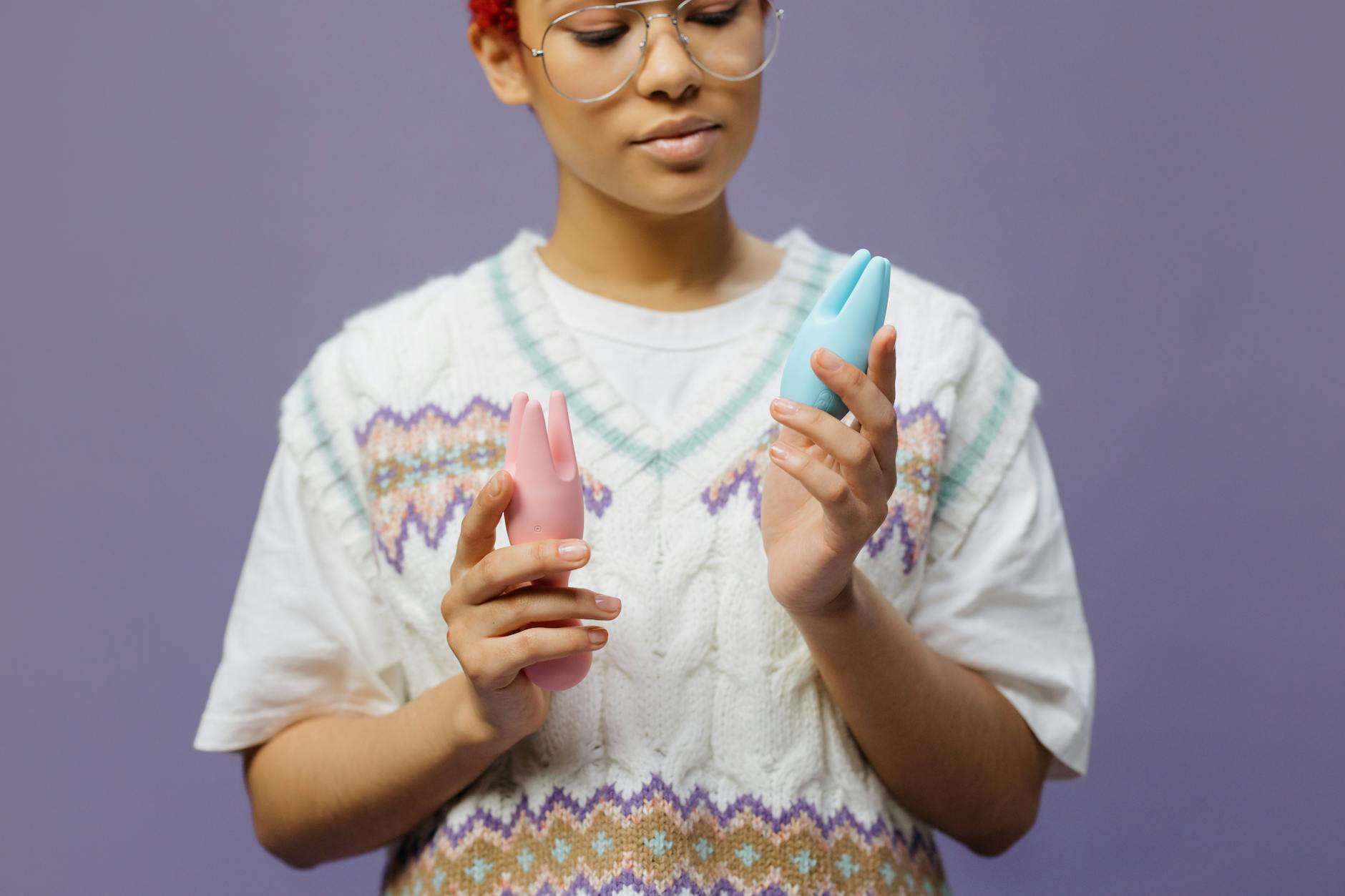
Photo by cottonbro studio on Pexels
What changes when guilt lifts
One of my clients once told me that the first time she used a clitoral vibrator without guilt, she cried. Not from the sensation. From relief. From discovering that her body could feel good in a way she'd given herself permission to experience. She'd spent decades in a kind of sexual split: present with partners, absent from herself.
When guilt softens, that presence comes back. Your orgasms often feel more intense. Your arousal takes less time to build. You stop performing and start feeling. You learn things about yourself that you bring into partnered sex.
And something else happens: you stop waiting for someone else to give you permission to feel good. You stop measuring your pleasure against external standards. You know, intimately, what your body actually likes. That's power.
FAQ
Is it normal to feel guilty about solo pleasure?
Completely normal. Most guilt around masturbation comes from religious upbringing, cultural messaging about women's sexuality, or family dynamics where pleasure was shamed. It's learned, so it can be unlearned. Noticing the guilt without judgment is the first step to moving past it.
Will solo pleasure affect my relationship with my partner?
Positively, usually. People who feel confident about their own bodies and desires communicate better about sex, feel less resentment, and experience more pleasure partnered. If anything, it strengthens intimacy because you're bringing wholeness into the relationship instead of needing your partner to complete you.
How often should I use a lemon vibrator if I'm working through guilt?
Start with once a week, alone, without pressure to orgasm. Just be present. This isn't about frequency. It's about rewiring your nervous system's association between pleasure and safety. Three to four times usually shifts something. From there, you can tune in to what your body actually wants.
What if I still can't relax even when I'm alone?
That's often a sign that guilt runs really deep. Consider working with a therapist, especially one trained in somatic work or sex therapy. Sometimes shame is connected to past trauma, family dynamics, or religious messaging that needs professional support to unpack. That's not weakness. It's honoring how real this is.
Does using toys make "real" sex less satisfying?
No. The sensations are neurologically different. A lemon vibrator stimulates the clitoris in a way partnered sex often doesn't, primarily because of the specific intensity and pattern. Solo play and partnered sex are complementary, not competitive. Many people find that understanding their own pleasure through solo time actually enhances partnered sex.
What if my partner gets upset about me using toys?
That's worth discussing directly. Sometimes partners are threatened because they're carrying their own shame about sex. Sometimes there's deeper relational work to do. A good conversation might sound like: "This isn't about you. It's about me learning what my body likes. I want to bring that knowledge into our sex together." If the partner remains controlling about your solo pleasure, that might indicate a broader relationship issue worth exploring.
The bottom line
Guild is noise. Your desire is real. They're competing for your attention, but only one of them is actually you.
When you use a lemon vibrator or any clitoral toy for your own pleasure, you're not being selfish or indulgent or broken. You're reclaiming something that was made to feel wrong so that your sexuality could be controlled. You're learning your own body. You're practicing self-directed pleasure without external validation.
That's not rebellion. That's belonging to yourself.
Ready to explore this without the weight of inherited shame? Check out our guide to using lemon vibrators for better sensation when returning after a long break to ease back in. Or if you're navigating this within a relationship, how to use lemon vibrators when your partner prefers no vibration walks through those conversations.