The guilt that shouldn't exist
Let's be real. If you've ever felt weird about touching yourself alone, or thought "I should want this only with my partner," you're not alone. And I want to name something straight: that guilt is not about you. It's inherited.
Most of us grew up in environments where solo pleasure was either never mentioned or quietly framed as less legitimate than partnered sex. Religious messaging, parental discomfort, cultural narratives, peer shame. We absorb these stories early and they stick around, whispering that your solo pleasure is somehow selfish or proof that something's missing from your relationship.
Here's the contradiction that data doesn't back up: the healthiest relationships include people who know their own bodies, enjoy solo pleasure without guilt, and show up to partnered intimacy as whole people rather than as half-people searching for completion.

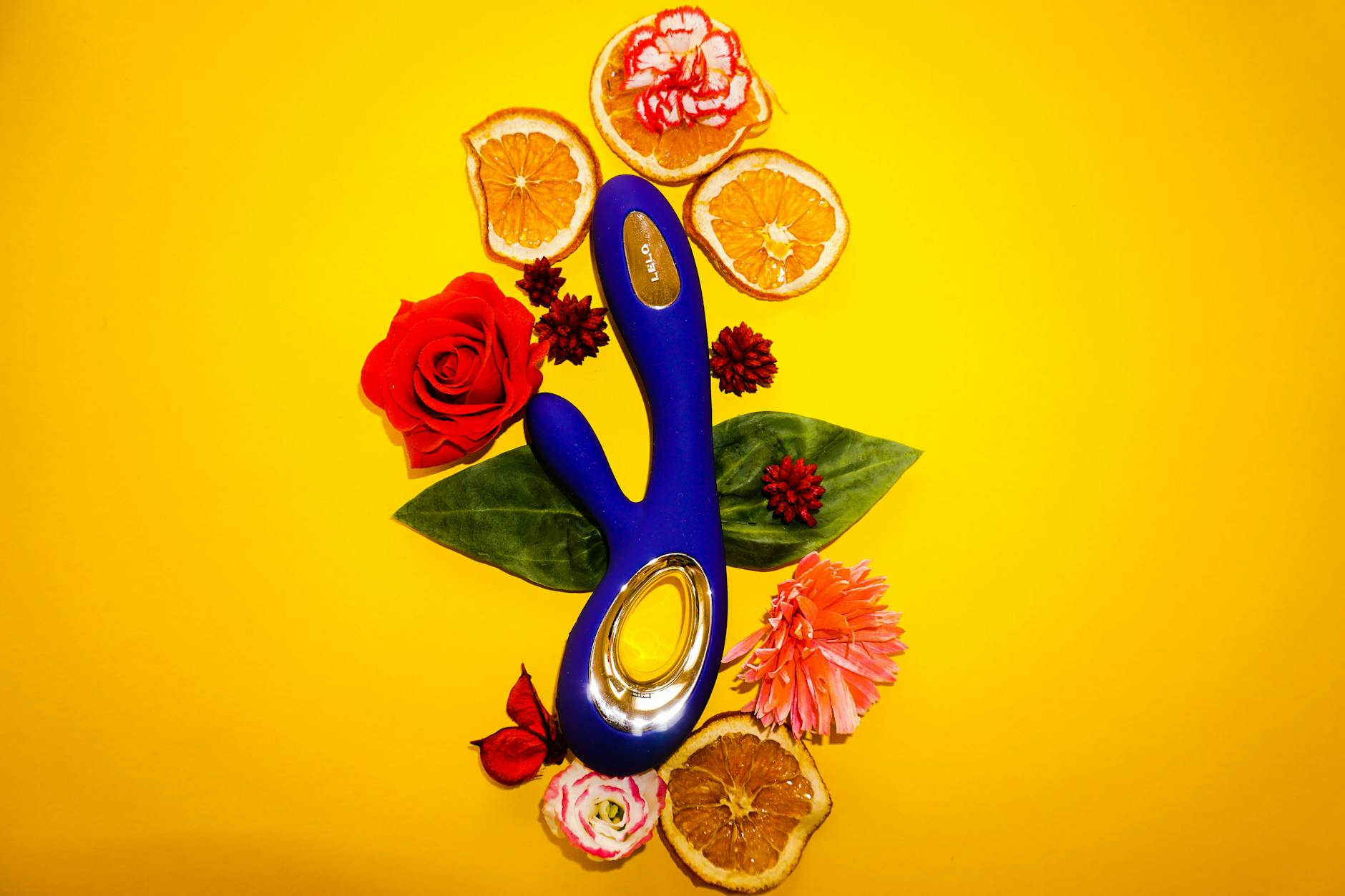
Photo by cottonbro studio on Pexels
Why solo pleasure actually matters
There are three things that happen when you make space for solo pleasure. None of them are frivolous.
First, you get data about yourself. When you explore your body alone, without the performance dimension or the focus-splitting of a partner, you learn where sensation lives. You learn your rhythm, your pressure preferences, what pattern works on Monday versus Wednesday. This is not selfish information. This is the foundation of good communication with a partner when you're ready for that.
Second, you interrupt the shame cycle. Shame grows in secrecy. It weakens when you normalize something. Each time you give yourself permission to feel good alone, you're telling your nervous system: "This is allowed. This is safe. This is me taking care of me." That message compounds.
Third, you build a relationship with your own pleasure that doesn't depend on anyone else's availability or desire. This is not about rejecting partnership. It's about resilience. Life happens. Partners travel, get sick, lose interest temporarily, go through their own stuff. Your capacity to feel good doesn't have to pause when theirs does.
What lemon vibrators change about solo sessions
There's a reason suction technology has shifted how people experience solo pleasure. Traditional vibrators are fast and direct. They work, but they can also feel one-dimensional after a while, and they demand a lot from your hand and arm.
Lemon clitoral vibrators use a completely different mechanism. The suction mimics a sensation that your body recognizes but can't replicate alone. It's gentler than you'd expect, deeper than direct vibration, and it engages more nerve endings. For solo play specifically, that matters because you're not negotiating rhythm with a partner. You can spend 20 minutes on pattern 2, exploring what happens when you don't rush.
Many people report that the first time they experience suction with a lemon clitoral vibrator, solo, is the first time they've actually paid attention to their own pleasure without distraction or goal-focus. That shift alone is worth noting.
The permission framework
Here's what I tell clients in my practice who are working through this: solo pleasure is not a substitute for partnered intimacy, and it's also not something you need to earn or justify.
You don't need to:
- Wait until your partner is unavailable (treating it like a consolation prize)
- Hide it or feel ashamed when they find out
- Apologize for it or frame it as "keeping the spark alive" in your relationship
- Use it as a test of whether you should break up
- Feel guilty if you want it more than partnered sex
You just need to claim it.
Start with the mental frame. "I deserve to feel good. My body is mine. This is self-care." I know that sounds simple, but the neurological piece matters. Your brain has been trained to filter solo pleasure through guilt. You're retraining it to filter it through permission.
Then, make space for it. Don't treat it like stolen time. Don't rush through it or do it while you're halfway thinking about something else. Ten minutes of actual attention beats 30 minutes of distracted rushing. Lock the door if you need to. Give yourself the same care you'd give to any self-care practice.
When you're in a partnership
If you're partnered and you're working through solo pleasure guilt, here's the relational piece: you're allowed to have this without disclosing every detail. "I'm taking some time for myself" is a complete sentence. Your solo pleasure life doesn't require audience or approval.
That said, some couples find it works to talk openly about it. Not in a performance way, but in an I'm-building-a-healthier-relationship-with-my-body way. That conversation often goes: "I'm exploring my own pleasure alone because I want to know myself better and feel less disconnected from my body. This isn't about you or about something being missing." Most partners who aren't dealing with their own stuff respond to that with relief.
The self-awareness that comes after
Here's something that surprises people. When you start regular solo practice with a lemon vibrator or any tool that lets you really pay attention, you often become more present with a partner too. Not because you're performing or trying harder, but because you're less fragmented internally. You know what you like. You're not constantly analyzing whether you should be feeling more. You can just be there.
That clarity is the opposite of selfish. It's what actually strengthens partnership.
Why the shame narrative falls apart
Look, I say this from decades in this field: shame about solo pleasure usually isn't about the solo pleasure itself. It's about old messages that your body isn't yours, that desire is something you should contain or hide, that good people (women especially) aren't supposed to prioritize feeling good.
Those are structural messages, not truth. And they're worth questioning.
When you use a lemon suction vibrator alone and you feel good and you don't apologize for it afterward, you're not just having an orgasm. You're reclaiming a small piece of ownership over your own body. That matters more than the physical sensation, honestly.
FAQ
How often should I explore solo pleasure?
As often as you want. There's no healthy limit. Some people prefer daily, some weekly, some a few times a month. The marker isn't frequency. It's whether you're doing it from desire or from compulsion. If you're exploring because your body is asking for it, that's the right amount.
Will my partner feel threatened if I use a lemon vibrator alone?
Some partners do initially, especially if they grew up with shame around sex too. If that happens, the conversation isn't about defending yourself. It's about curiosity. "What are you worried about?" Often they're worried it means you don't want them, or that they're not enough. Those are their insecurities, not reflections of your intention. You can hold that boundary and also listen to them.
Is solo pleasure different from partnered pleasure?
Completely different. Partnered sex has performance dimensions, mutual arousal, emotional intimacy, and the complexity of another person's body and timing. Solo pleasure is exploratory, on your schedule, with no external pressure. Neither is better. They're different experiences in a full sexual life.
What if I feel more pleasure alone than with my partner?
That's worth exploring, but it doesn't necessarily mean something's wrong. You might be less anxious alone. You might have more time to warm up. Your partner might not know what you like yet. Sometimes the issue is relationship stress that shows up in bed. Sometimes your bodies just respond differently together. A therapist or sex coach can help sort that.
Can I use a lemon vibrator if I'm single and want to stay that way?
Absolutely. Solo pleasure isn't a placeholder for partnership. It's a complete experience on its own. Some of my clients are happily single and they use tools like lemon clitoral vibrators as part of how they take care of their own bodies and their own satisfaction. That's legitimate.
How do I get past the guilt if I was raised religious or in a shame-forward environment?
Slowly, usually. You're retraining a nervous system that learned guilt young. Every time you touch yourself and don't apologize, you're teaching your brain something new. A therapist who specializes in sexual shame can speed that up. But it's worth noting: the goal isn't to erase the religious or cultural values that matter to you. It's to separate those from the message that your body and your pleasure are inherently wrong.
The one thing to remember
You're not broken for wanting solo pleasure. You're not selfish for taking it. And you don't need anyone else's permission, including a partner's, to explore what feels good in your own body.
A lemon vibrator is just a tool. The real work is the permission you give yourself. Once you do, you'll probably be surprised how much shifts. Not just in how you feel physically, but in how you feel about yourself.
If you want to talk through any of this in more depth, or if solo pleasure is tangled up with other relationship stuff, reach out. That's what I'm here for.